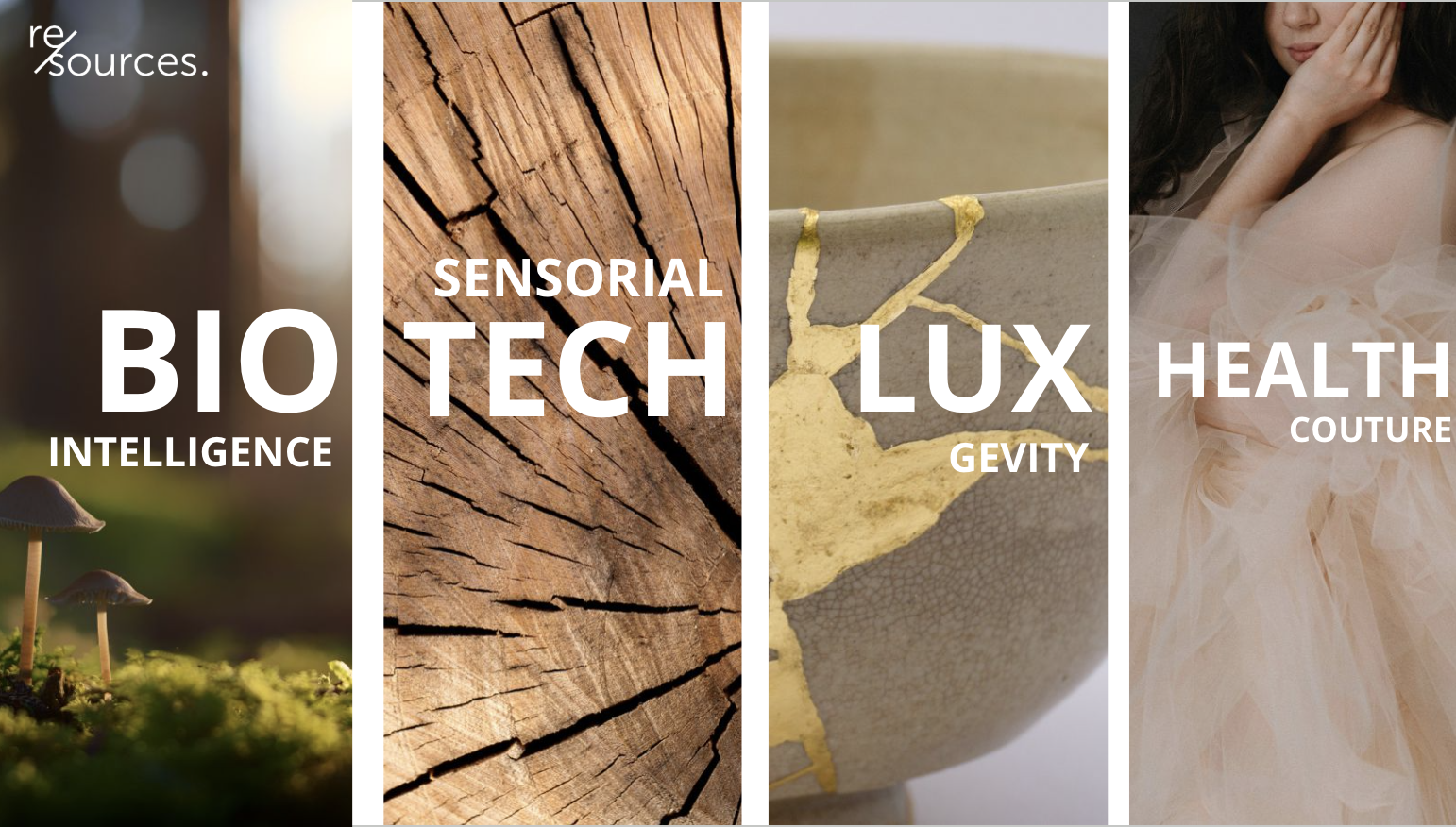
Sustainable Beauty Trends 2025
Our annual trend report focuses on Sustainable Beauty Innovations with actionable insights to future-proof your product development in beauty and avoid greenwashing.

Every year, in March, at re-sources, we look at sustainable beauty through a slightly different lens.
Not just sustainability. Not just beauty.
But the tension, the creativity, and the opportunity that live in the space where the two meet.
Our full reports, reserved for our loyal clients, connect the dots between what consumers expect and what brands and suppliers are actually making possible today. Because there’s understanding a trend, and then there’s turning it into a product that can sit on a shelf, survive a stability test, and delight someone in the palm of their hands.
We translate the future into workable directions. Actionable, relevant, industry-ready. Through a sustainability lens.
It’s what you can do when you’ve spent more than 20 years inside the beauty machine, watching the gears turn.
I often say that re-sources sits between the big trend agencies and the product development labs. We help you decode what matters now, through the lens of sustainability and innovation, and we help you find the right partners when you’re ready to push the boundaries even further.
Here’s a preview of what’s shaping Sustainable Beauty in 2025. Connect with us if you want the full report.
Trend 1 – Bio-Intelligence
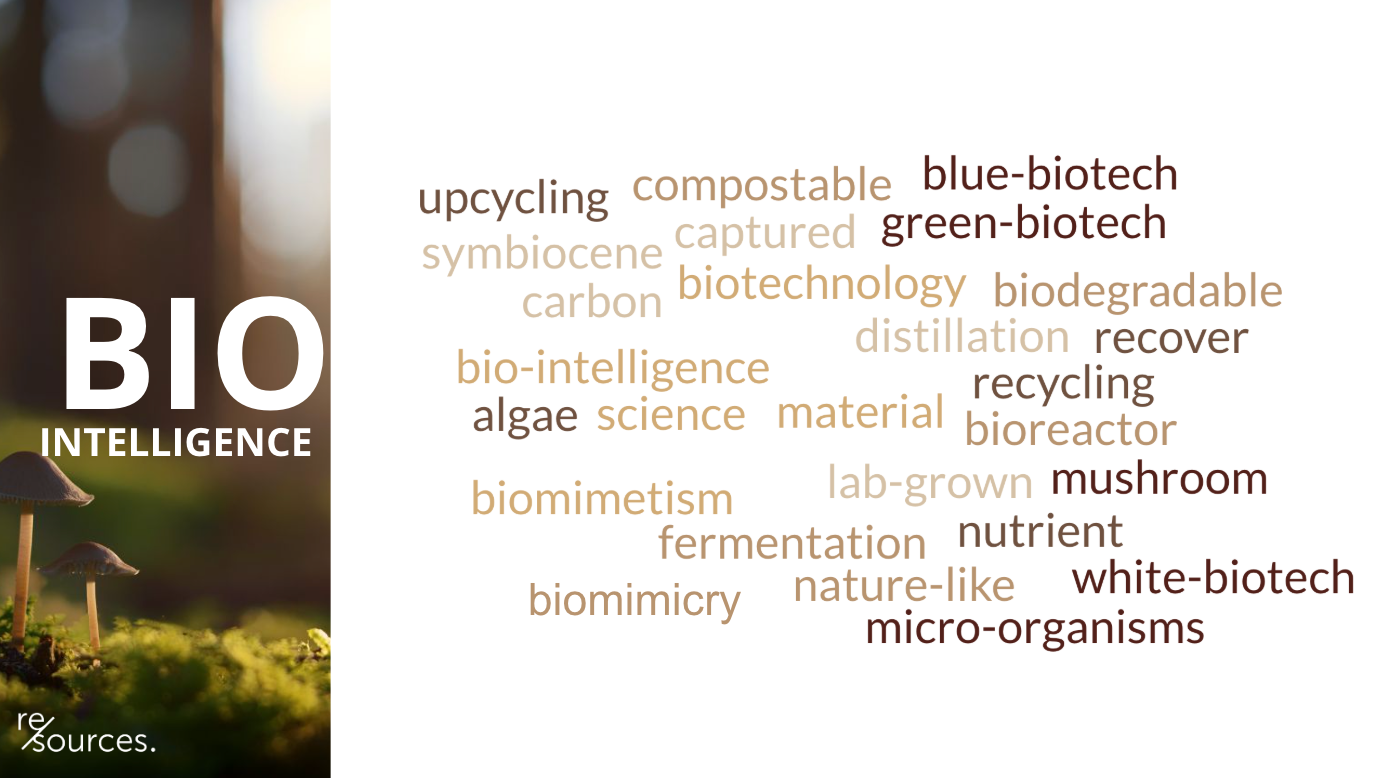
Nature is no longer the inspiration board; it’s the collaborator. We’re moving into the Symbiocene. Towards a relationship where humans work with nature rather than against it. Biomimicry turns natural structures into design blueprints.
Biotech is the new engine of green innovation. Blue biotech related to the ocean, green biotech related to plants, or white biotech related to microorganisms can unlock new raw materials through fermentation, distillation, algae bioreactors, vertical farming, or other biological processes through technology-enhanced solutions.
On the packaging side, compostable, carbon-capturing, nature-like solutions become a source of inspiration. Upcycling matures into a design principle rather than a marketing line. We’re not just talking sustainability; we’re engineering it at a molecular level.
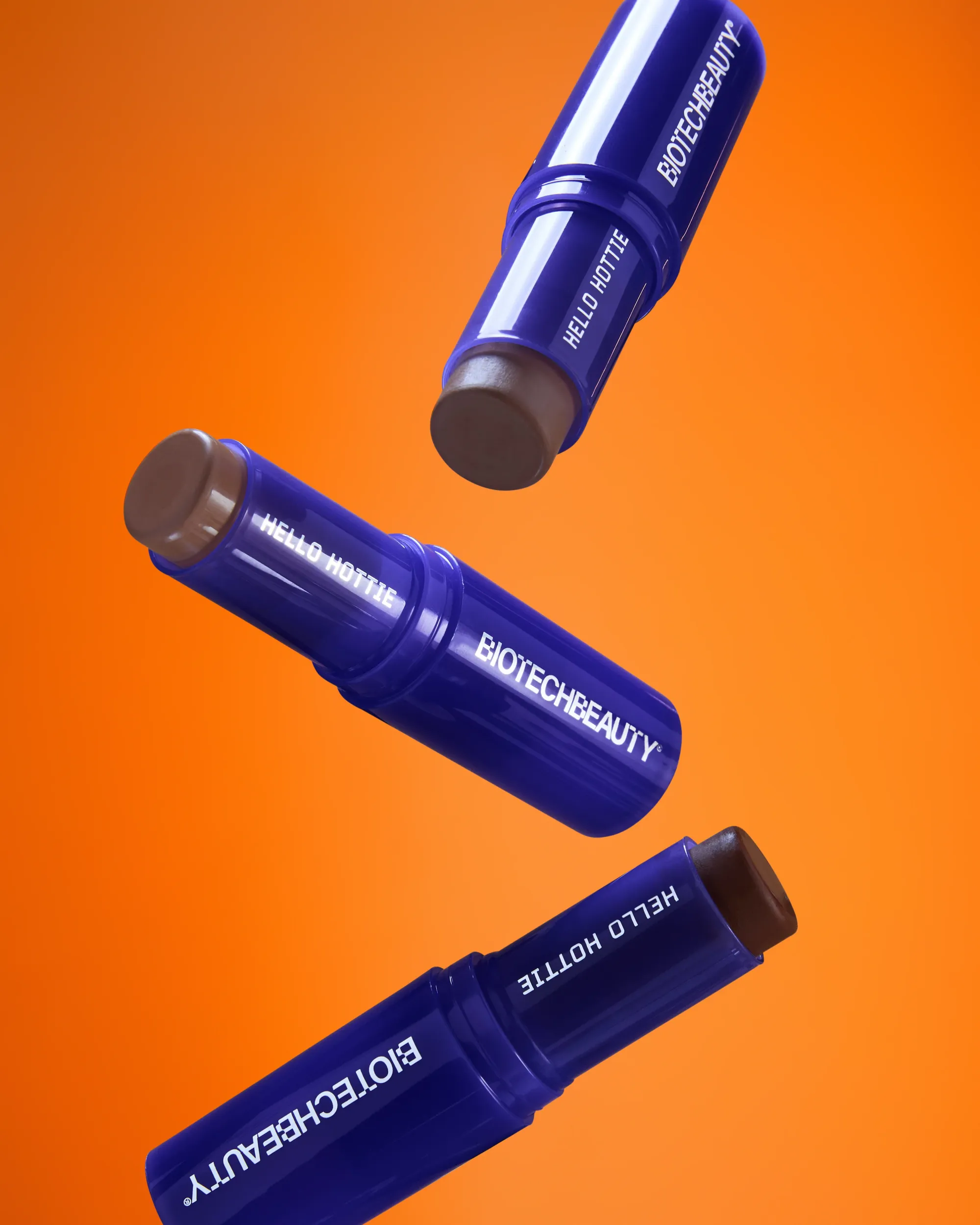
Some market examples include brands like Biotech Beauty, making biotech fun, colourful, and yet sustainable, with a brand ethos focused on "skin-improving makeup backed by science. It is about human and planetary health.
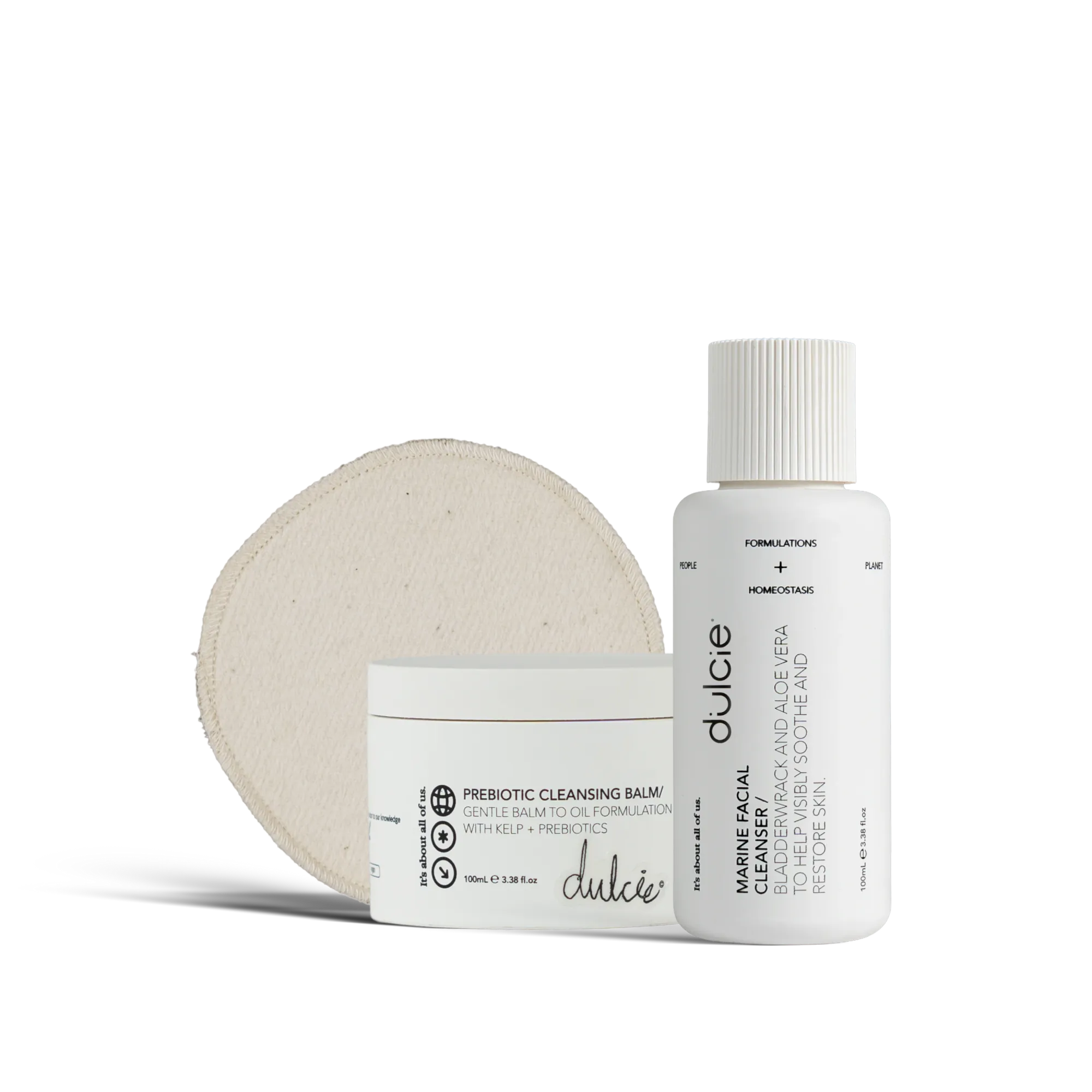
Another example is Duclie (formerly named Hackels), where biotech is used inside out, from formula and lab-grown solutions, to lab-grown materials for packaging, showing that the product life cycle can actually be a cycle and no longer a linear action from making, using, to discarding.
Trend 2 – Sensorial-Tech
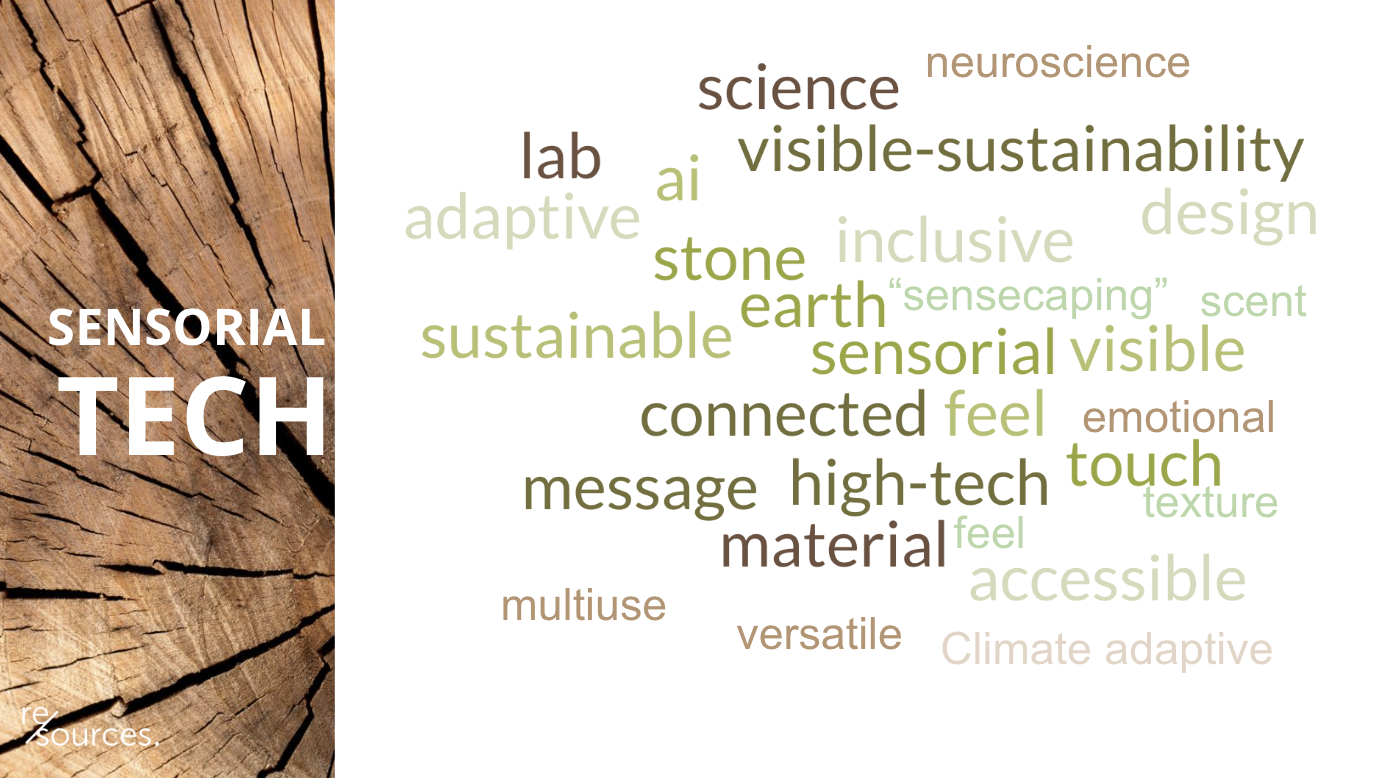
Sustainability becomes sensorial. Visible. Felt.
The product becomes the message: through texture, sound, inclusivity, and design that engages all senses. Neuroscience and materials science collide to create textured products inside and out, with even climate-adaptive skincare and multiuse products that adjust to skin, season, or situation.
It’s high-tech, yet grounded in stone, earth, and tactility.
It’s an AI meeting accessibility. Sustainability you can actually touch.
Examples include TILT Beauty, which launched in February 2025 with a focus on ergonomic design to create inclusive, accessible beauty products.
Selena Gomez's Rare Beauty has also been designed with accessibility in mind, and has released "Made Accessible Initiative", with "packaging that's easy to use, and that allows a secure grip, or applicators that are comfortable to hold and manoeuvre with precision."
Both of these examples prove that we can improve design, make a product refillable, and enhance the consumer experience through ergonomic design.
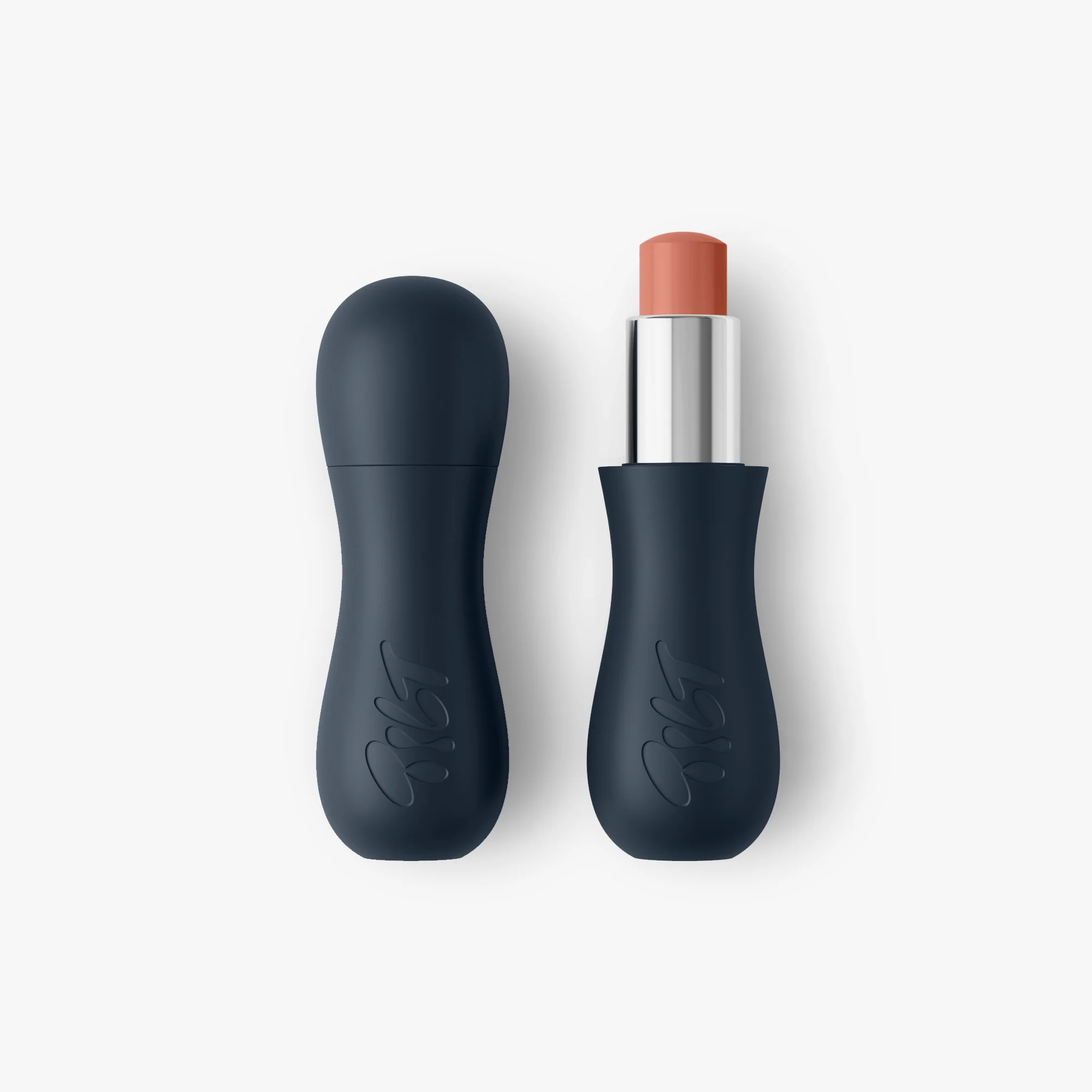
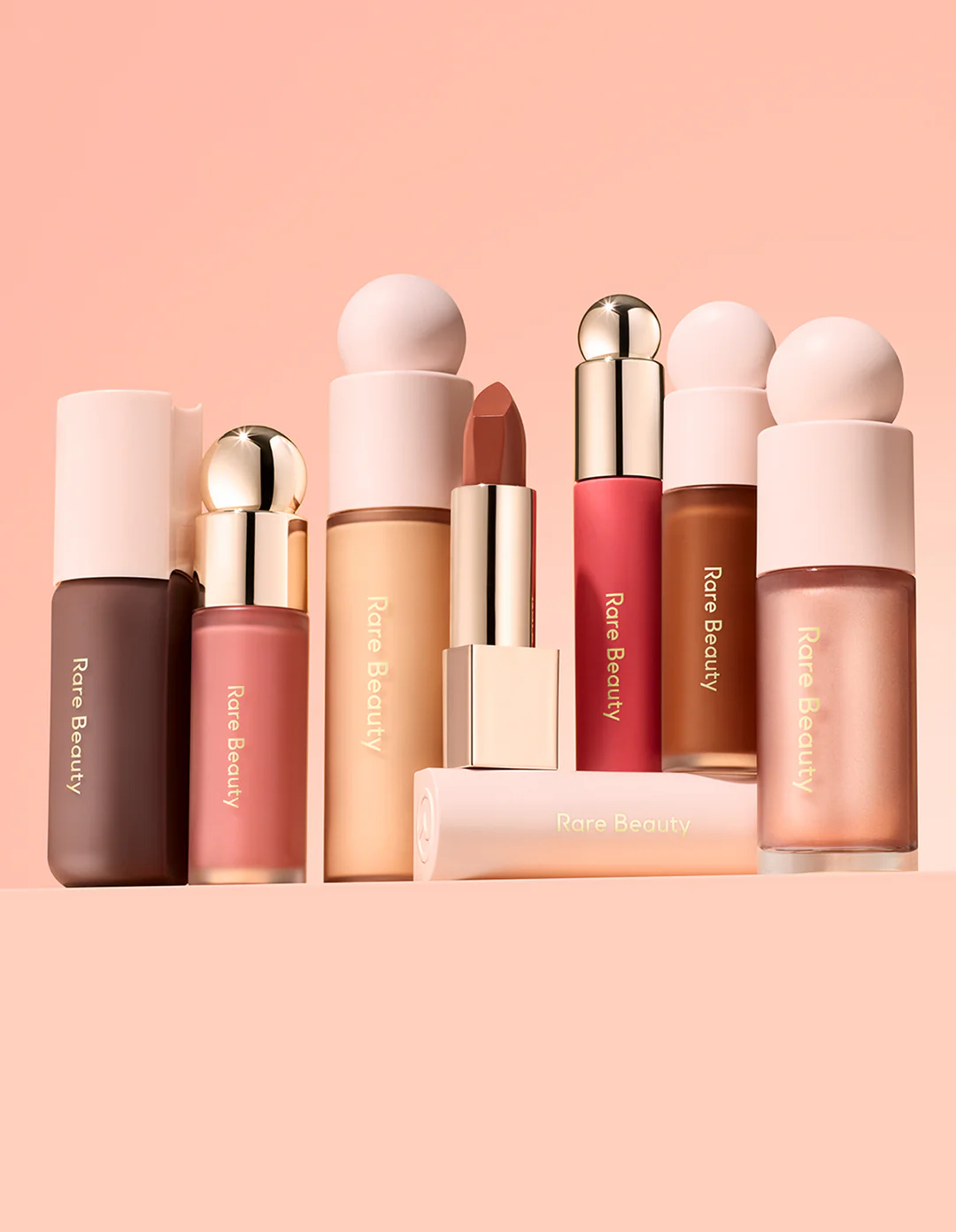
Tilt Beauty - Rare Beauty
Trend 3 – Lux-Gevity
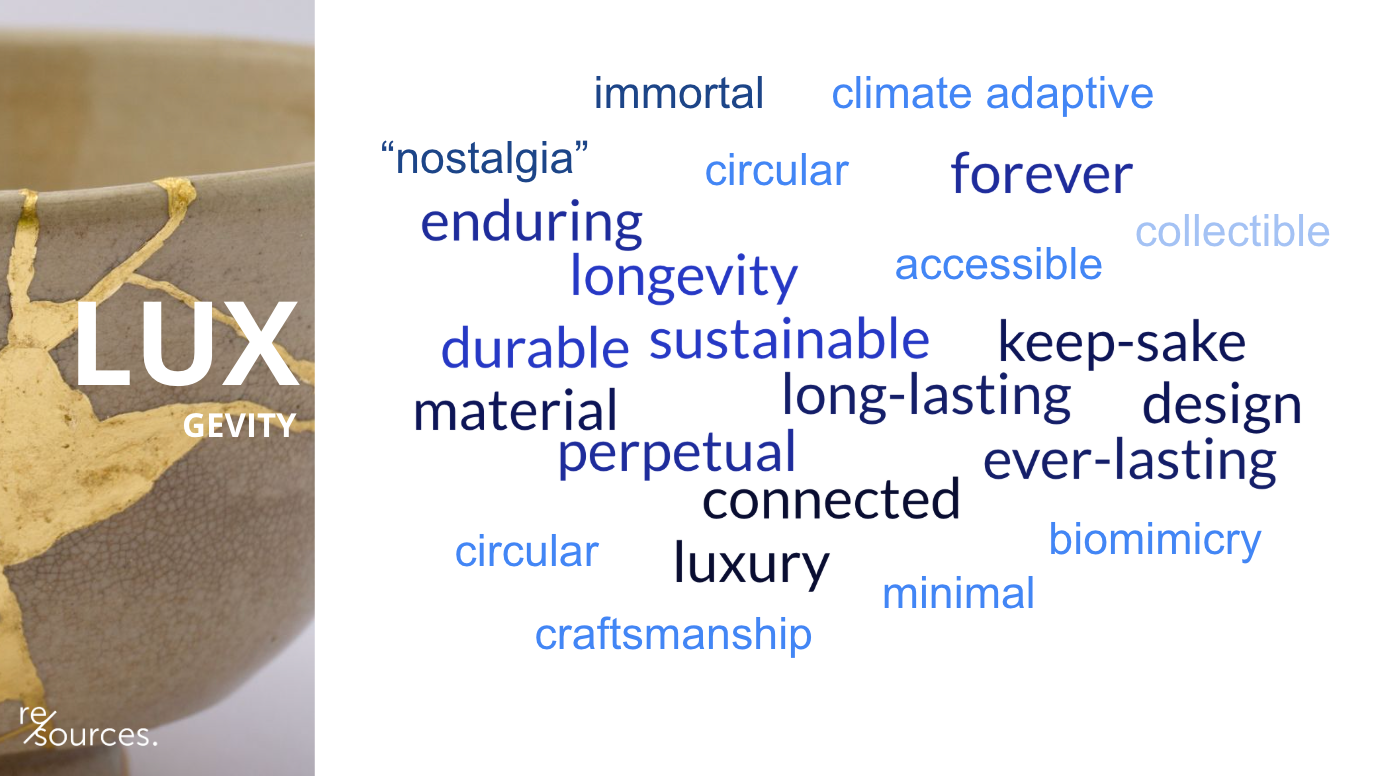
Luxury gains new context: durability, longevity, and emotional resonance. Products become keepsakes, not disposables. Which is particularly adapted to refillable beauty. Bringing an added meaning to beauty containers.
Timeless over trend-led. Minimal design, maximal meaning. Circular by intention. Regenerative by design.
Think climate-adaptive materials, collectable objects, and craftsmanship that honours the past while preparing for the future. It’s luxury made to last, and last well.
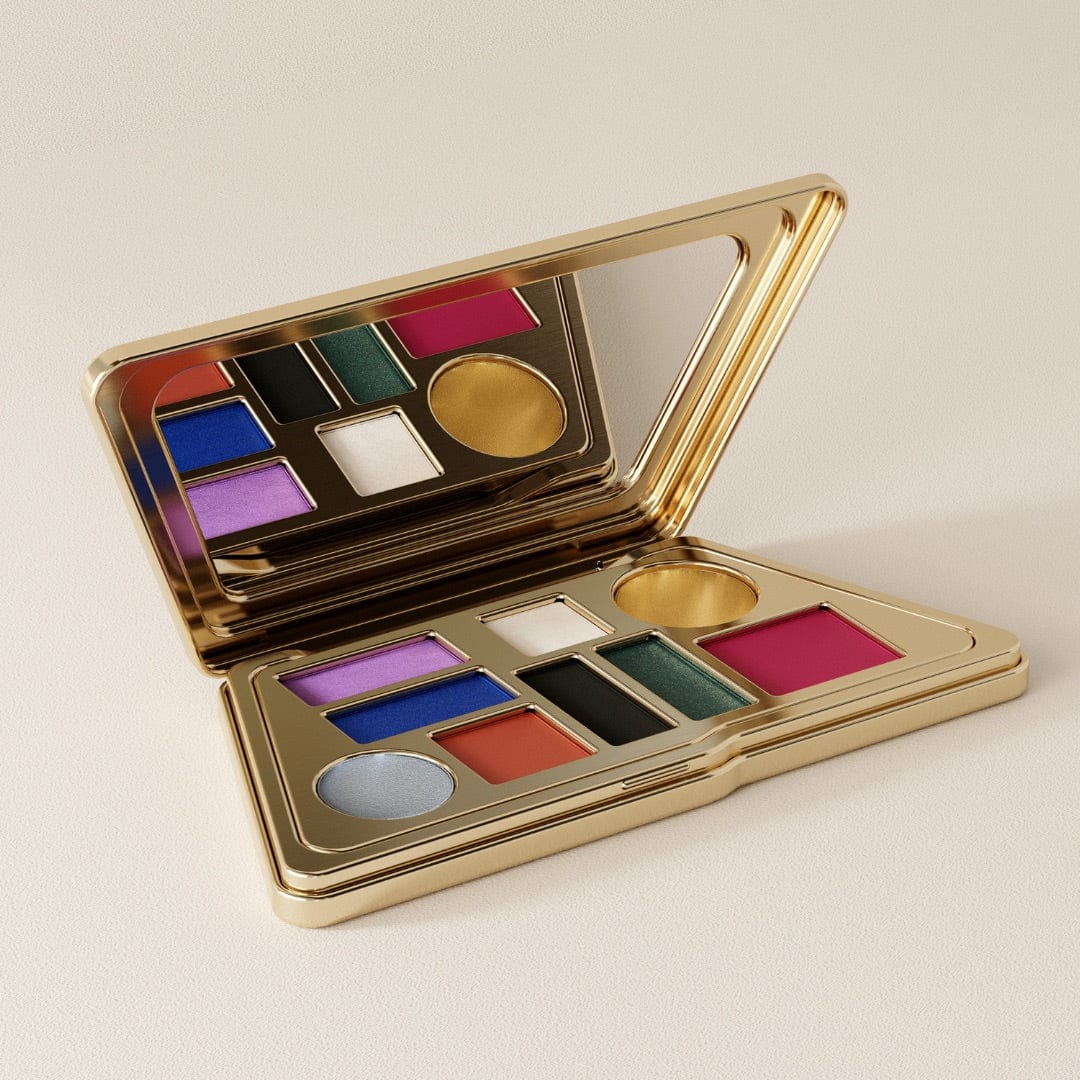
Market examples include Aora Mexico, which launched in early 2025, with a vision to create "clean beauty with colour" and offer a "plastic-free" range, while using aluminium for their electric palette. Proving that colour doesn't have to be boring if housed in monomaterial packaging. Once closed, it feels like a mini purse; once open, it brightens up the makeup routine with deep colours (the palette is refillable - the entire colour pan can be updated).
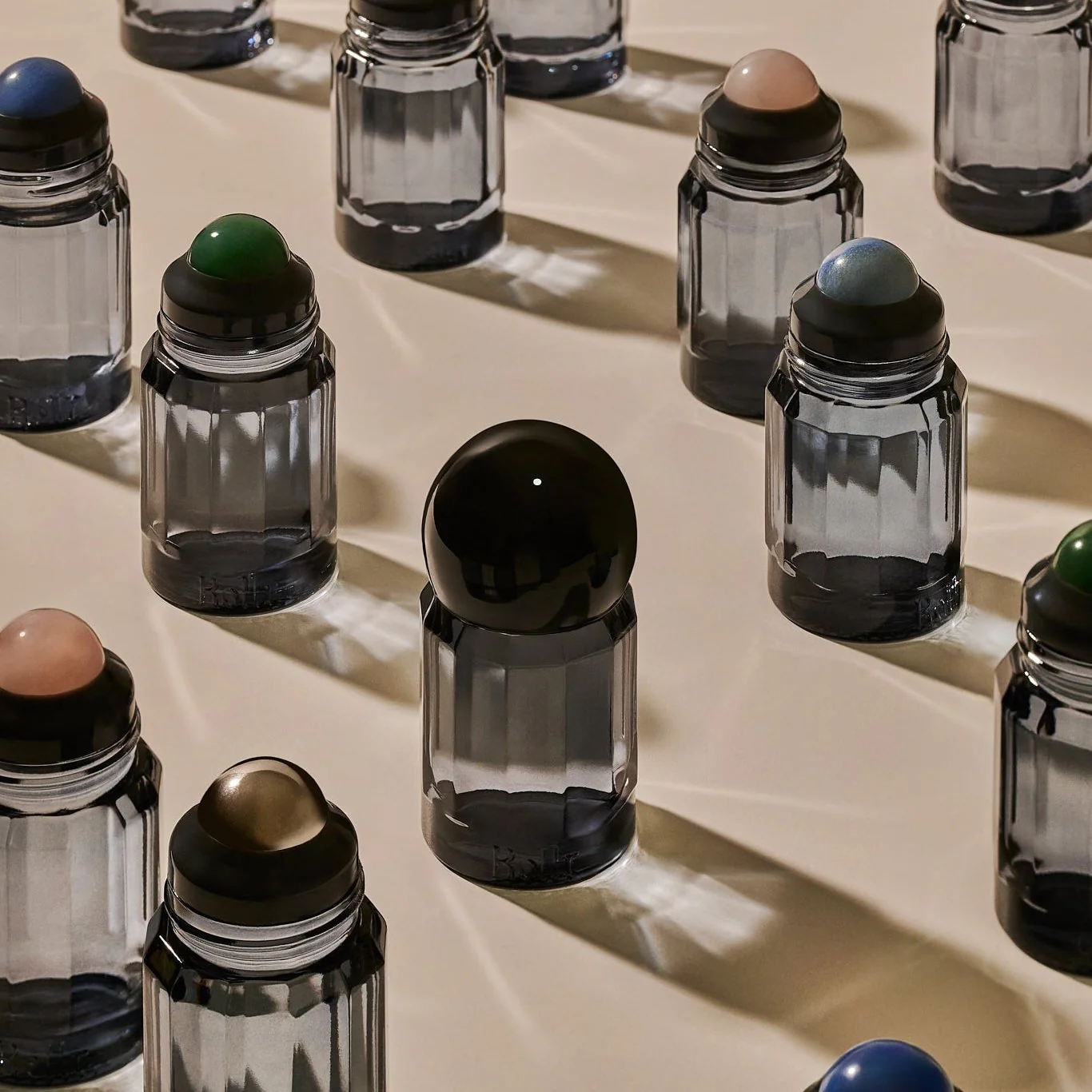
Another one is ROLLR from New Zealand, with a refillable deodorant featuring a precious stone roller ball for added benefit. Housed in glass, the liquid deodorant can be easily refilled and cleaned with a screw-top roller-ball system. Proving that applying deodorant can be a luxurious experience.
Trend 4 – Health-Couture
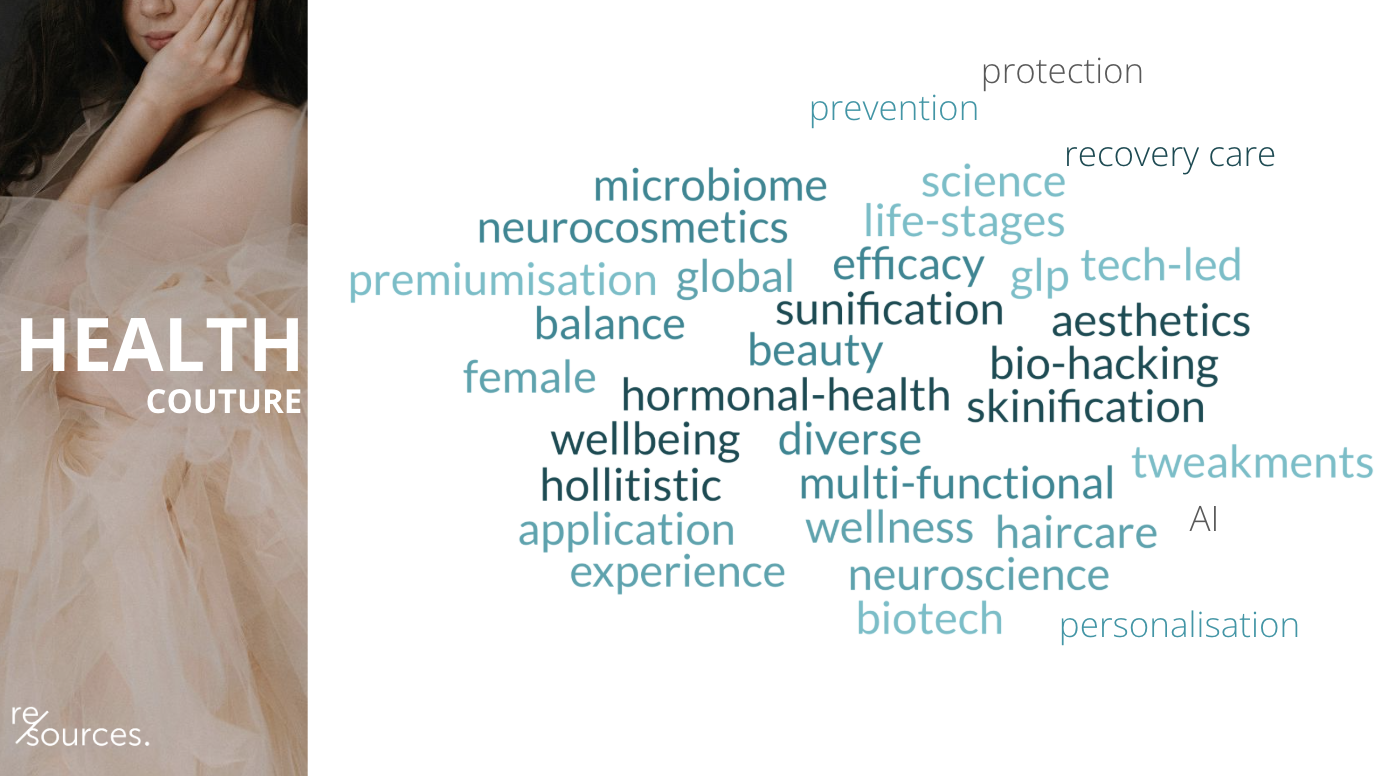
Where beauty meets biology, protection, prevention, recovery, and care evolve into a holistic aesthetic. Microbiome science, neurocosmetics, and bio-hacking techniques move into daily beauty rituals.
Skinification expands across every category: hair, skin, nails, and makeup. Wellness becomes architecture.
Tech-led tools and treatments meet hormonal health, life stages, and lifestyle shifts. Beauty becomes personal infrastructure, adapting with you rather than dictating to you.
Examples include Exponent in the US - a self-activated clinical-grade skincare - where active ingredients are kept at maximum potency in a powder format that is activated just before application with a hyaluronic acid serum. The refillable cartridge is made of glass, and both pumps can be used infinitely for the powder or the serum.
Another example, with Isamaya French's 5-point lift concealer, demonstrates that "clinical beauty" has become mainstream, with packaging and wording borrowed from the pharmaceutical or medical sector. Technically, the concealer cartridge is designed to be replaceable for full-refillable packaging.
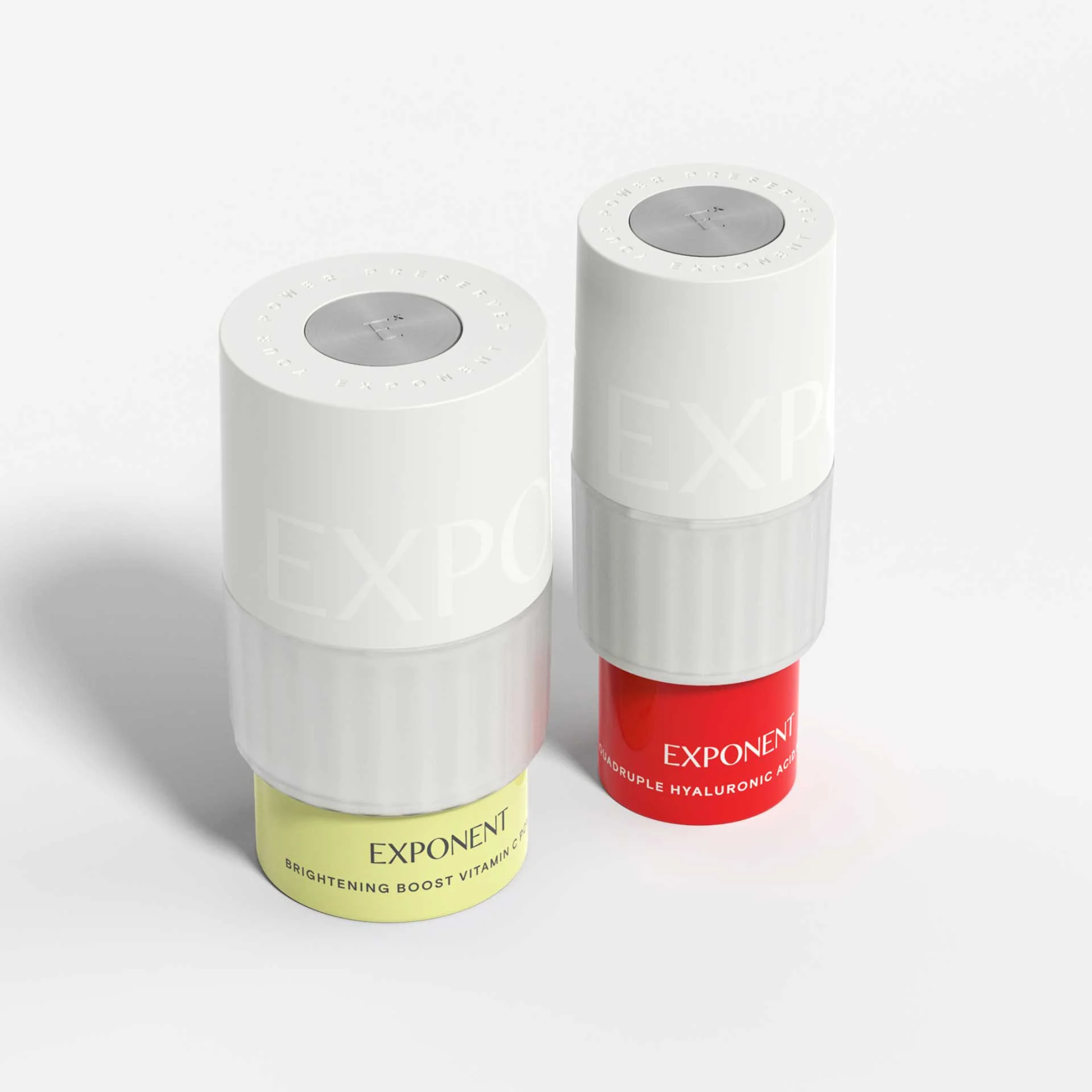
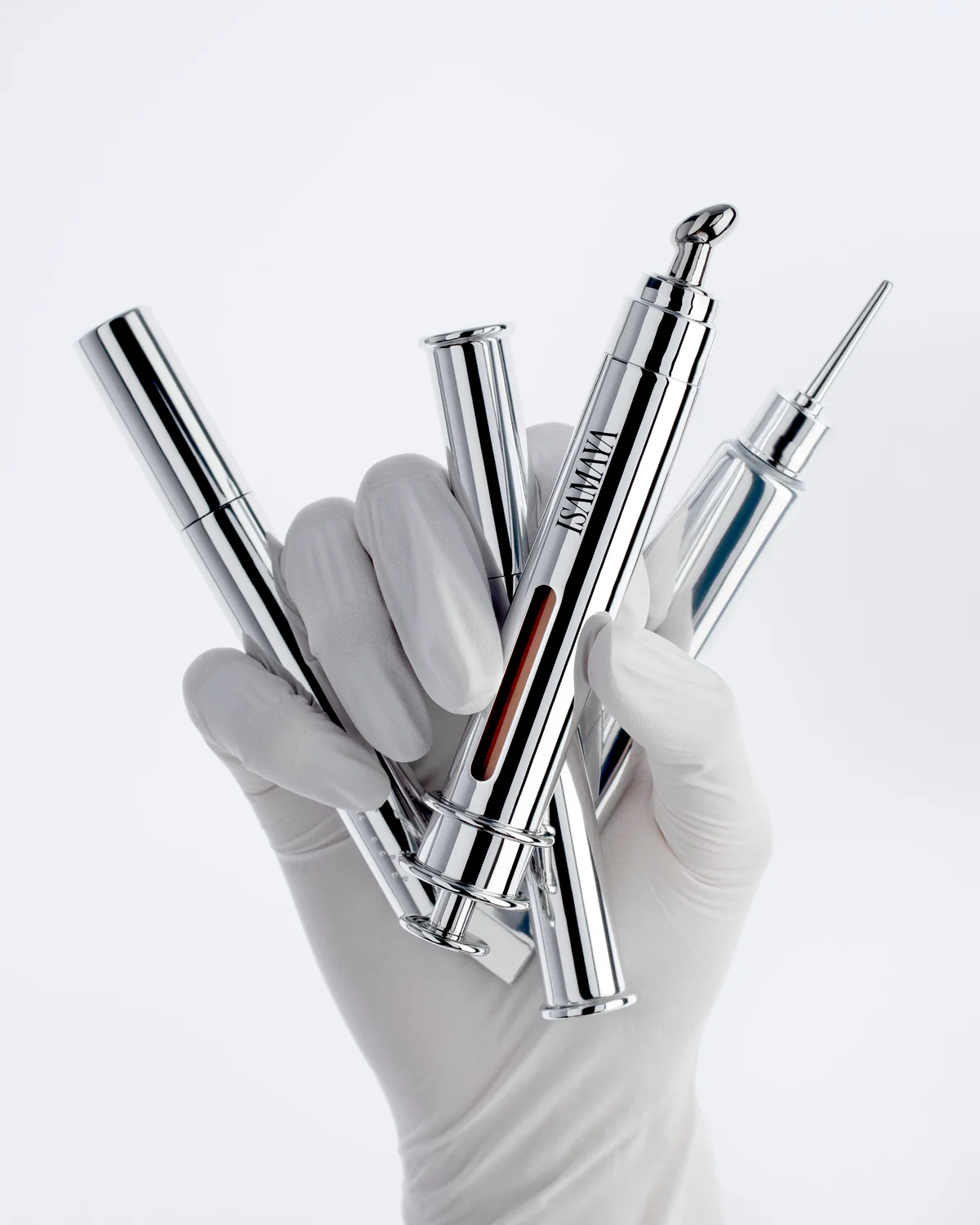
Exponent Beauty (Vitamin C Powder Serum) - Isamaya French (5-point lift concealer)
These four trends show a beauty industry that’s not only becoming more sustainable, but more intelligent, more sensorial, more enduring, and more attuned to health in every dimension.
If you’d like the full report or want to explore how these trends translate into real product opportunities, let's talk.


