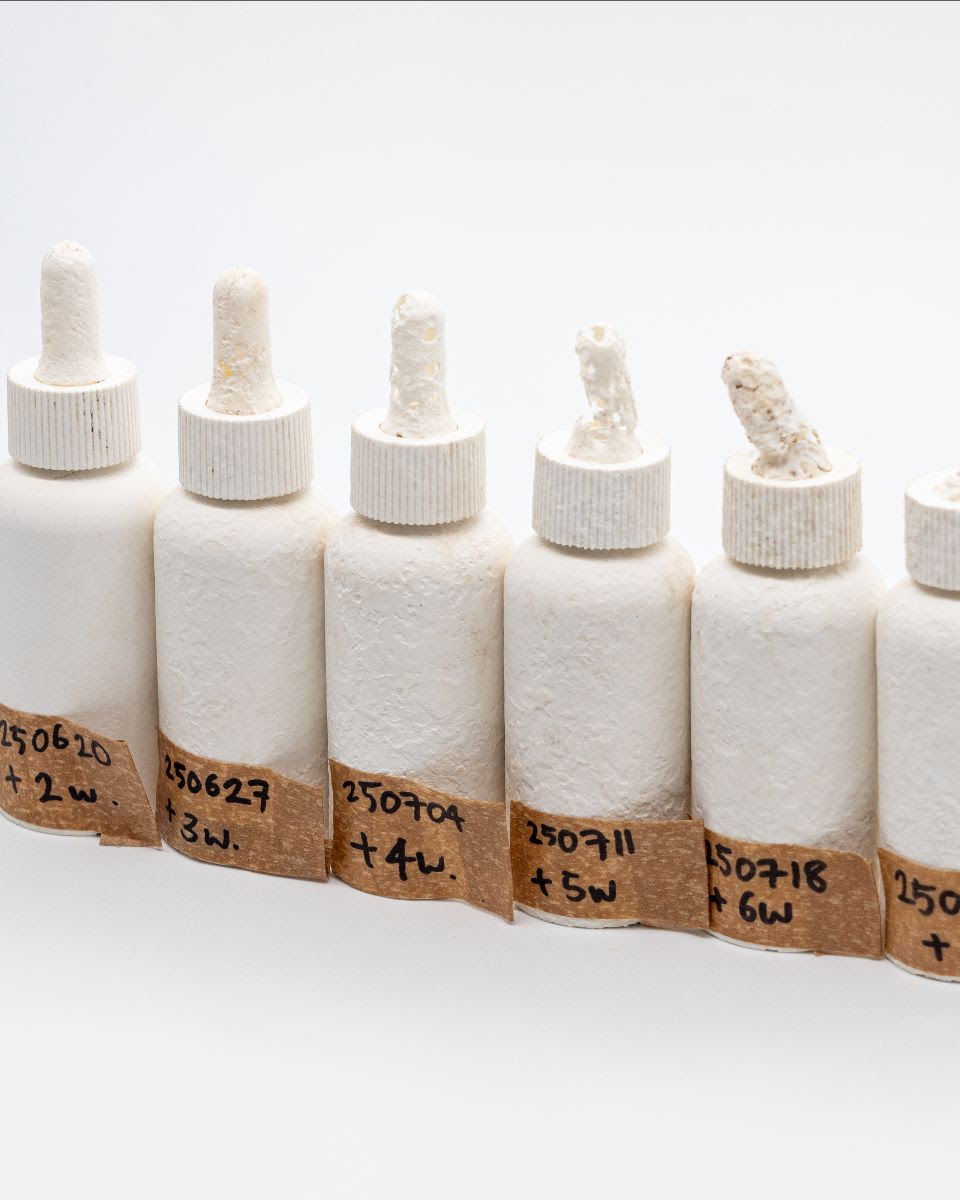
L'Oréal invest in new materials & ingredients innovations through "L'AcceleratOR" programme
Supporting start-ups and SMEs in its supply-side accelerator program, L'Oréal's global resources aim to launch 6-to-9-month pilot projects that could be scaled across the group’s international operations.

From next-generation packaging & materials to nature-sourced materials and circular solutions, L'Oréal has selected 13 start-ups from 1,001 applications to join its "L'AcceleratOR" programme. The French group aims to have solutions/applications ready by 2026 to pilot across its operations. Scaling these innovations will fuel sustainable solutions and accelerate the delivery of the group's sustainability ambitions.
We all know that sustainability has been taking a step back in recent months (or years, in the last 2 years) for fear of backlash over greenwashing or imperfect solutions that are not supply chain- or consumer-ready. In other words, some solutions haven't worked as well as expected, and many brands have taken a step back, waiting for more mature solutions to arrive.
There won't be any progress into sustainability unless governments or companies invest in R&D, and start-ups are often leaders in groundbreaking solutions. L'Oréal is one of the sustainability advocates, with its 2030 target pushing the envelope in the beauty industry.
Moving further towards bringing new solutions to the market, L'Oréal announced the first 13 startups and SME’s to join “L'AcceleratOR”. Endowed with €100 million over five years and run in partnership with the University of Cambridge Institute for Sustainability Leadership (CISL), “L’AcceleratOR” aims to be a catalyst for scalable sustainable solutions of the future to solve the most urgent challenges in climate, nature, and circularity.
From packaging made of wood to ingredients derived from waste, the first 13 pioneers chosen demonstrated the highest potential to advance next-generation packaging, ingredients sourced from nature, solutions to drive circularity, and predictive intelligence tools.
This new initiative, launched in April 2025, help identify, pilot and scale the solutions needed to address the continued challenges facing the beauty industry in new materials and ingredients. L'Oréal aims to actively support startups, SMEs, and established innovative companies with ready-to-pilot solutions in key areas such as low-carbon solutions, alternative ingredients, eliminating the use of fossil plastics and reducing plastic waste, low-impact processes, water resilience, nature-based solutions, and inclusive business models.
The 13 start-ups/partners, coming from all over the world, include:
Next-Generation Packaging & Materials, for seaweed and wood fibre, cellulose or moulded-pulp-based solutions for packaging:
- Kelpi (UK): Harnessing seaweed to create recyclable, low-carbon packaging.
- Bioworks (Japan): Producing novel bioplastics derived from sugarcane and other plant-based materials.
- with PlaX™: an innovative material with enhanced quality and functionality, made from biomass sources like polylactic acid (PLA) derived from plants such as sugarcane, and proprietary additives.
- Blue Ocean Closures (Sweden): Creating fibre-based caps and lids as an alternative to plastic packaging tops.
- Pulpex (UK): Developing the next generation of recyclable paper bottles.
- PULPAC (Sweden): An innovation company in low-carbon, paper-based packaging processes.
- RAIKU (Estonia): Turning natural wood into high-end, shock-absorbing protective packaging.
Nature-Sourced Ingredients, using the power of biotech and green chemistry for new ingredients:
- Biosynthis (France): Crafting renewable and biodegradable raw materials.
- Biosynthesis holds 5 major patents that protect its innovations and allow it to exclusively offer technological ingredients with highly sought-after cosmetic properties, such as biodegradable vegetable paraffins, proposed as substitutes for volatile silicones widely used in cosmetics (worldwide exclusivity) or still biosourced polyesters for the production of translucent lipsticks.
- P2 Science (USA): Bringing green chemistry and bio-sourced materials to the market.
- Oberon Fuels (USA): Converting wood and pulp waste into renewable ingredients for spraying formulas.
Circular Solutions, using the power of biotech for bio-based materials:
- Novobiom (Belgium): Using the natural power of fungi to turn complex waste into high-value products.
- REPLACE (France): A single-step technology that transforms complex and multi-layer plastic waste into durable, new, recycled, and recyclable items.
- Gàs Verde (Brazil): Producing biomethane to replace fossil fuels in industrial processes and transportation.
Data Intelligence, for next-generation decarbonisation system:
- Neutreeno (UK): A digital system to help companies calculate and cut emissions in their supply chains.
These 13 partners will enter an intensive support phase led by the CISL innovation team, focusing on pilot readiness.
They will also have the opportunity to gain access to L'Oréal's global resources to launch 6-to-9-months pilot projects and potentially have their solutions scaled across the group’s international operations.