Gen Z’s “manifesto for change” calls beauty brands to take action on sustainability.

When it comes to sustainability, we tend to think that younger generations are either careless or activists. A recent survey by the British Beauty Council, Sephora, and UNiDAYS (3,533 UK students from January 5th to 7th, 2026) revealed that students have a strong interest in being conscientious about beauty consumption.
Sustainability is key
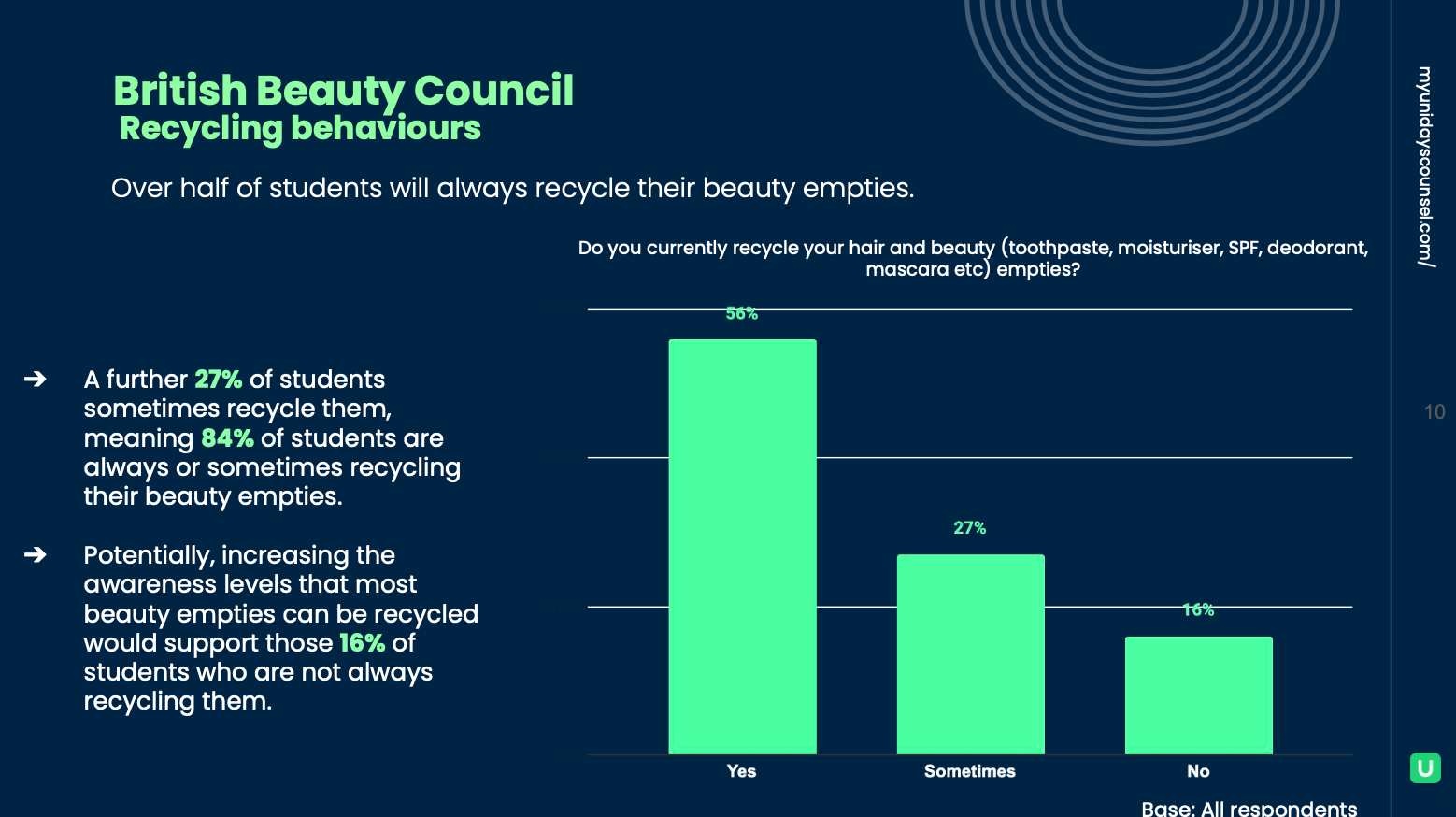
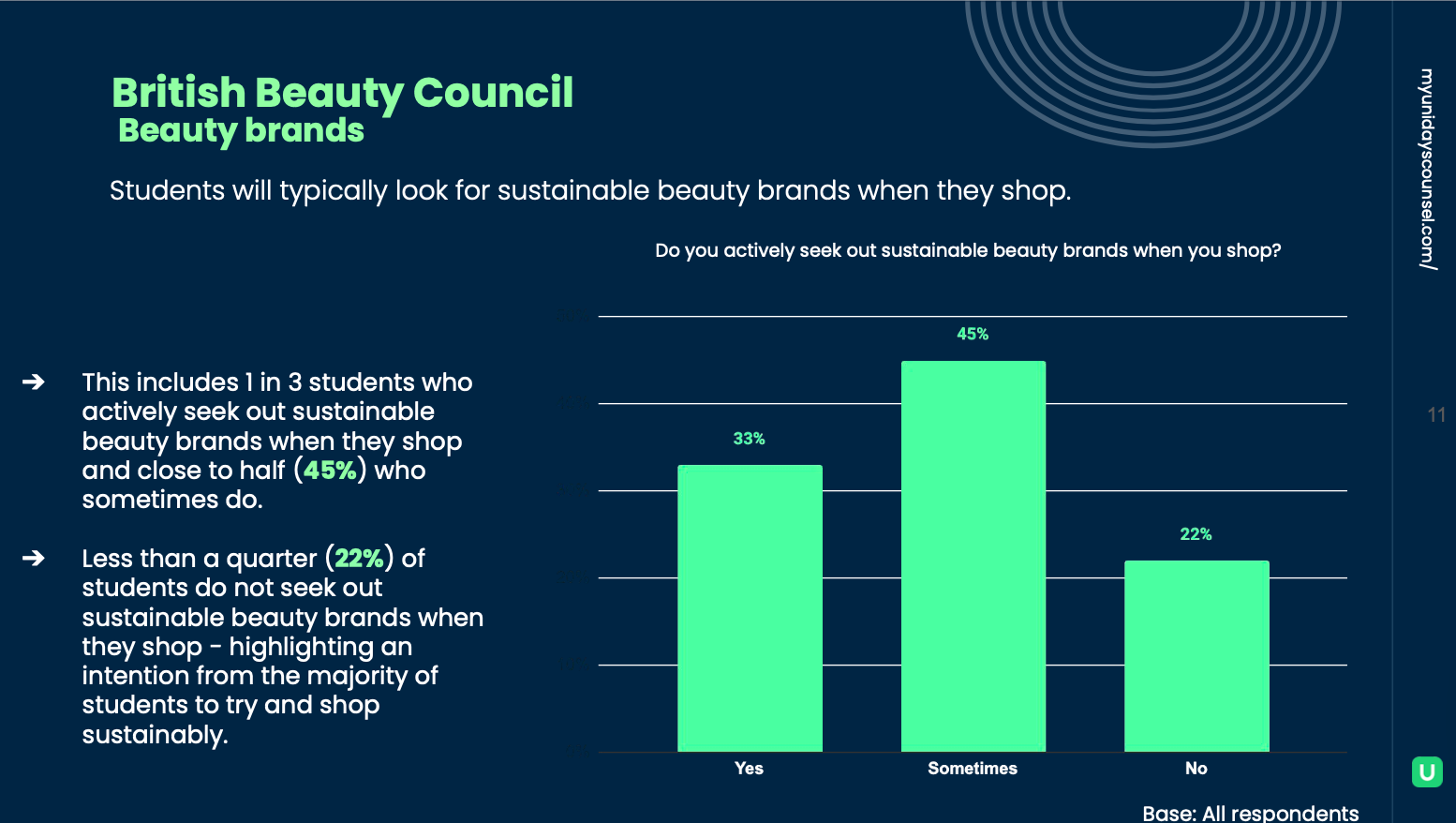
Indeed, sustainability is an important factor in beauty purchases for GenZ. Close to half (43%) of students find it "extremely" or "very" important, and another 41% find it "somewhat" important. The majority of Students indicated that they recycle their beauty empties (84%) as they also know that most beauty empties can be recycled, and 80% of Students typically seek out sustainable brands when they shop.
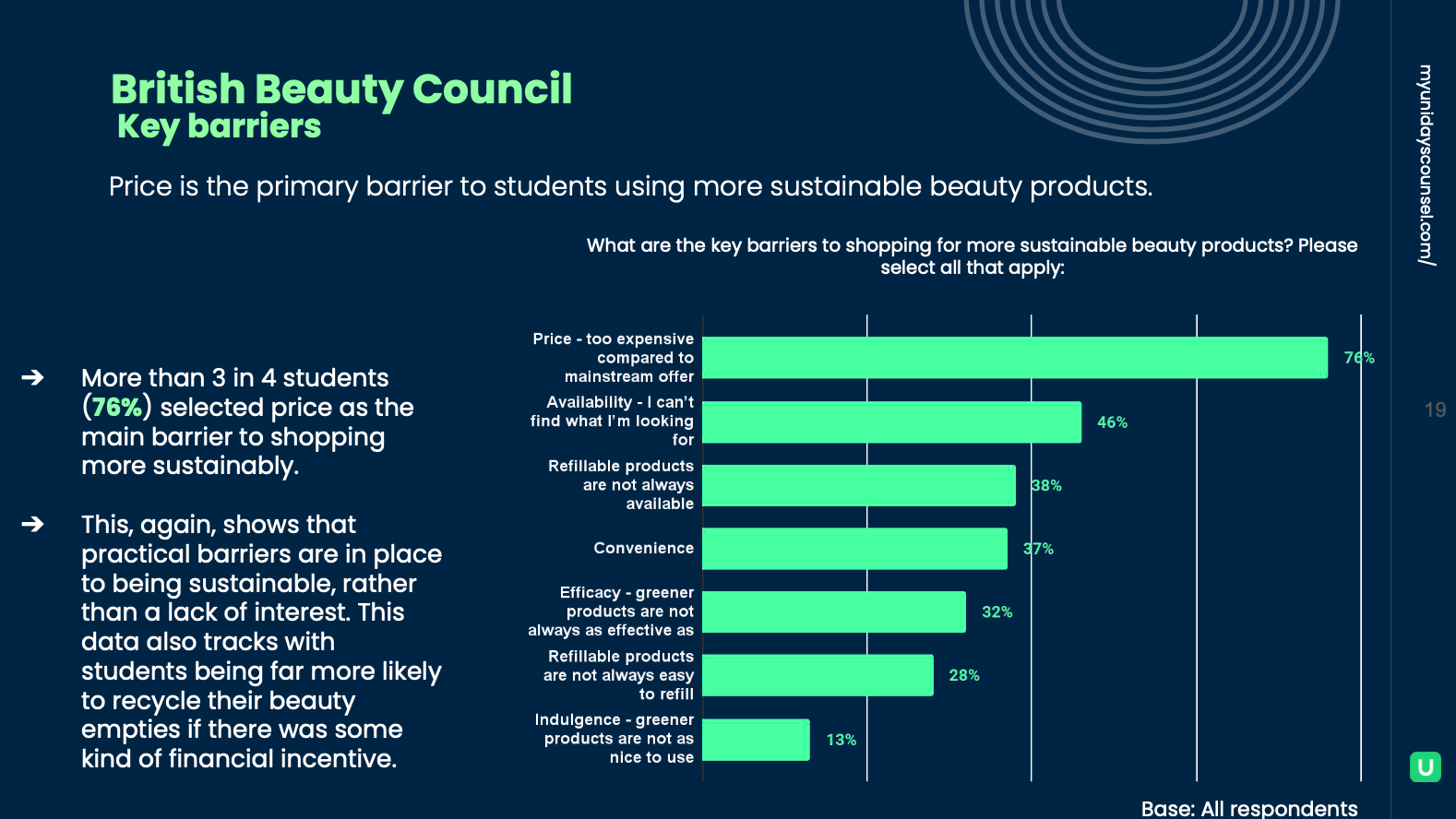
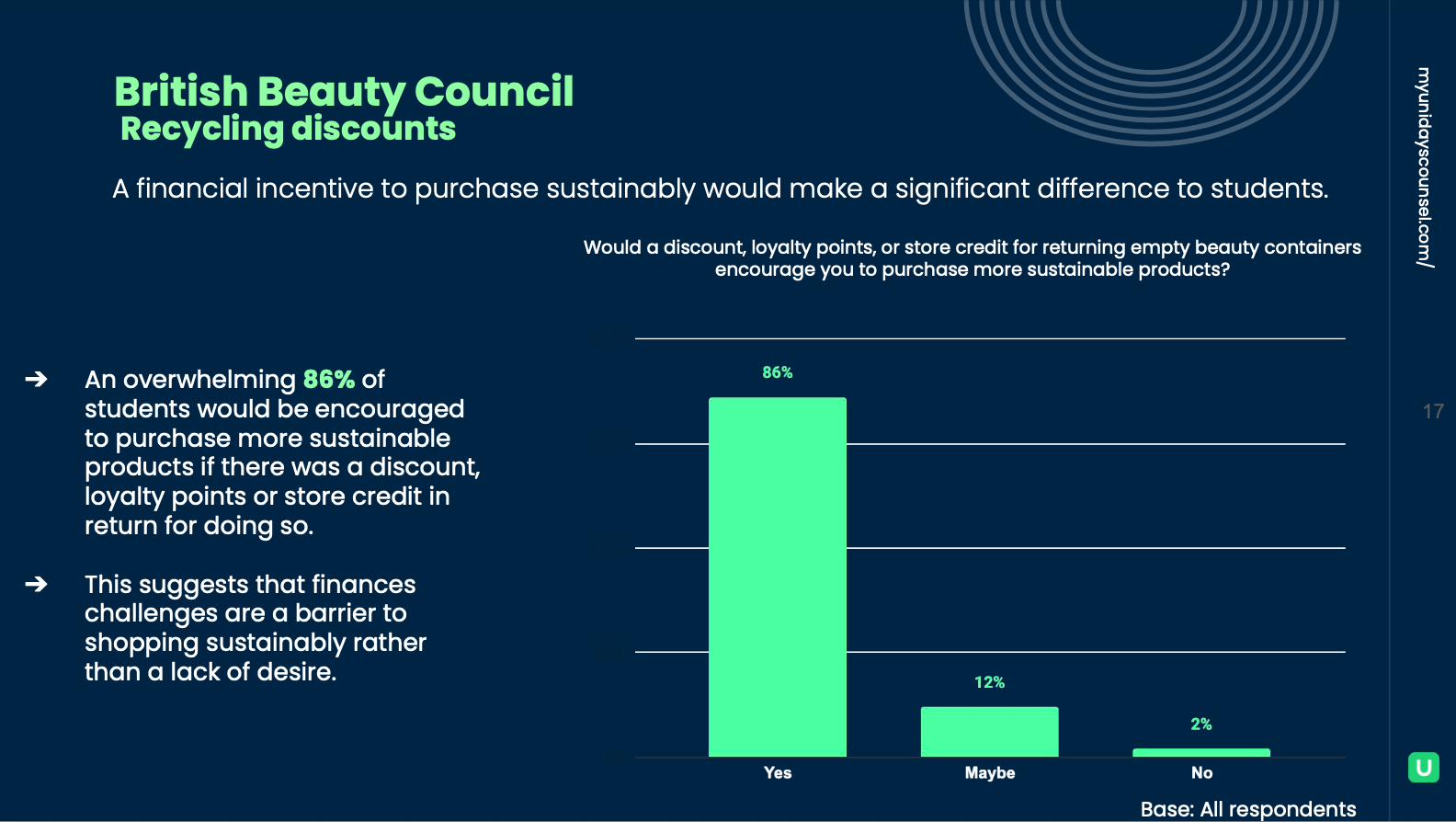
Price is by far the biggest barrier to students using more sustainable beauty products. There is typically a desire from students to be more sustainable, but there are practical barriers in place - indeed, an overwhelming 86% of students would be encouraged to purchase more sustainable products if there was a discount, loyalty points or store credit in return for doing so.
A surprising learning is that “efficacy”, which is often perceived as lower with sustainable products, doesn’t present as a main barrier to sustainability, but availability of a “greener” version, refillable or even convenience comes prior to that factor after price point.
Messages need to be clearer
The industry could also improve the messaging of sustainable products. Consumers find it difficult to understand the “real benefits” of using refillable beauty products, or even how to recycle them. We know space on packaging is limited, which is why, in our trends report, we explain that the packaging can be THE message. With shapes, arrows and other design aspects that make the packaging more intuitive.
The survey shows that 71% of students found it “extremely” or “very” important to have a clear, easy-to-understand explanation of how a product can be recycled or disposed of. Clear labelling could support the 26% who are currently unaware that most beauty empties can be recycled. Education could unlock behaviours. This could include clearer information on beauty products to further increase knowledge levels and recycling behaviours.
Refillable beauty
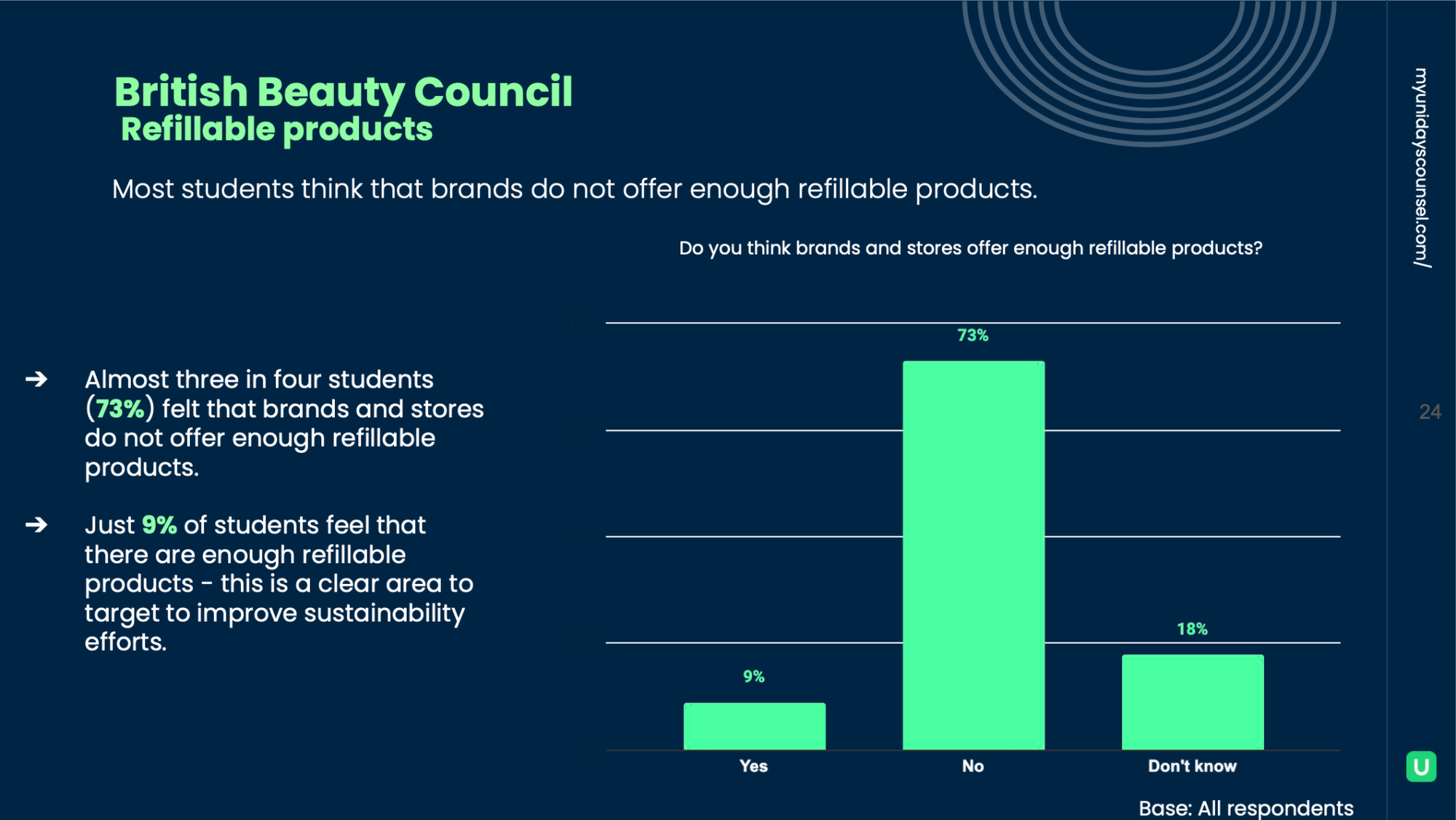
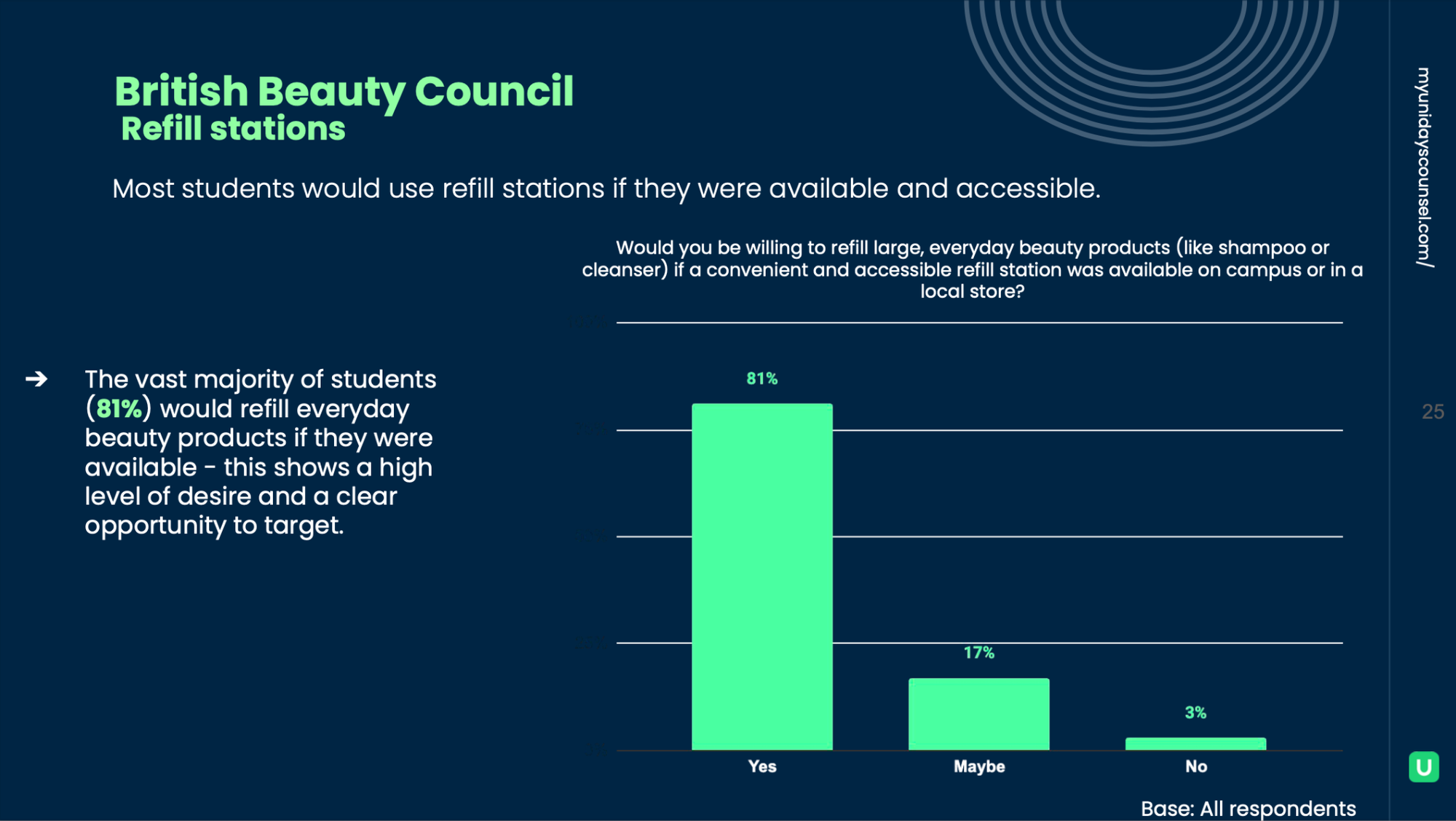
An overwhelmingly 73% of students think brands do not offer enough refillable products. The vast majority (81%) would use convenient and accessible refill stations for everyday products. This confirms a finding from another survey in France in 2025: the biggest barriers to purchasing refills were unavailability/lack of awareness (44%), concerns about product waste (32%), and even hygiene issues (19%).
Other Key Findings
Knowledge and Verification.
- 74% of students know that most beauty empties can be recycled.
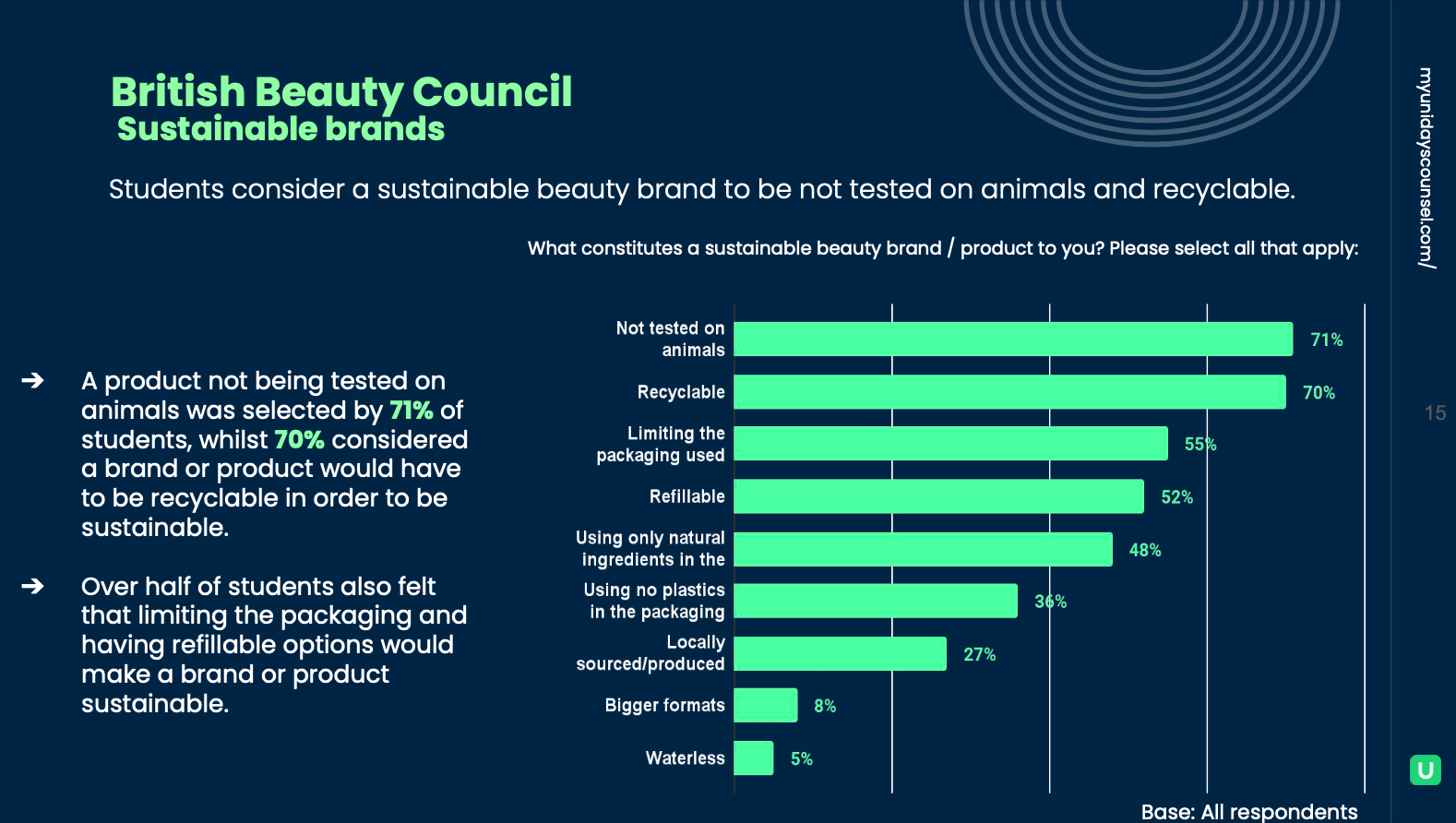
- 71% of students consider a sustainable brand to be "not tested on animals," and 70% believe it must be "recyclable".
- 71% of students find it "extremely" or "very" important for beauty products to have clear, standardised recycling labels.
- 63% of students would be more likely to trust a brand if its sustainability claims were verified by an independent third party.
The report is available to download on the British Beauty Council website (link below).
 Eva LaGarde